Earthquakes strike without warning, leaving little time to react and often causing devastating consequences. That reality makes having a reliable earthquake preparedness checklist not just a recommendation but a life-saving necessity. Around the world, communities living along fault lines are increasingly recognizing the importance of proactive planning, especially as urban populations grow and infrastructure ages. From stocking essential emergency supplies and installing reliable alert apps, to creating a clear family plan and prioritizing personal safety, an effective earthquake preparedness checklist transforms uncertainty into readiness and fear into confidence.
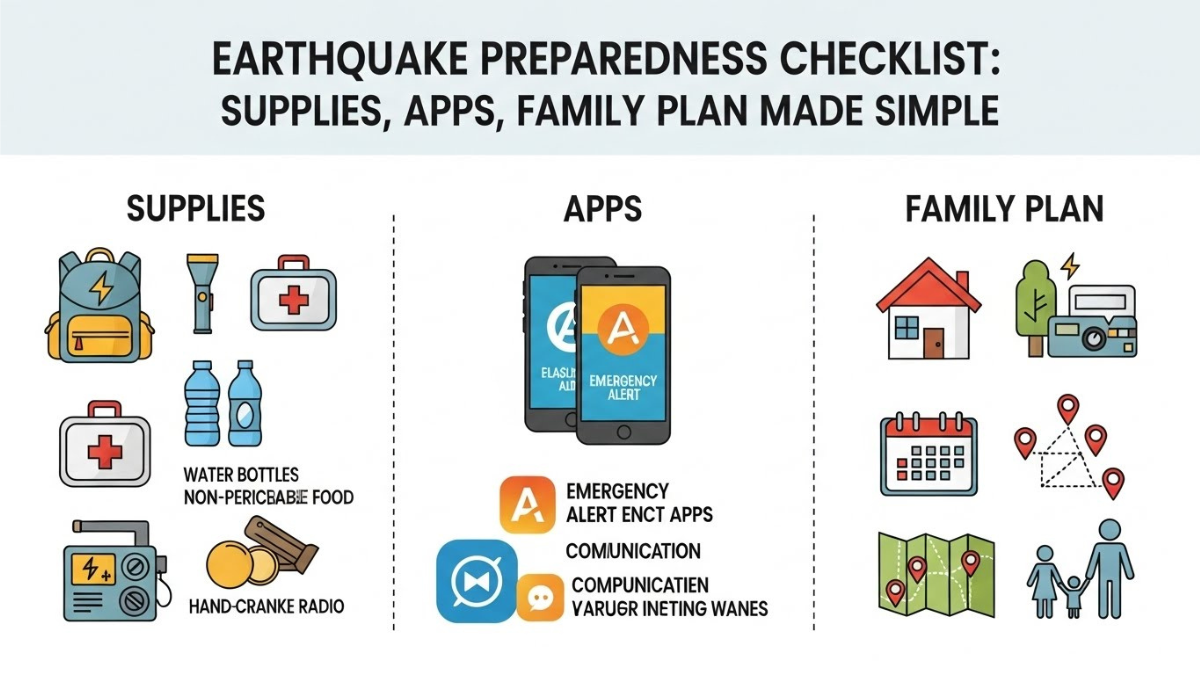
Why Earthquake Preparedness Must Be a Priority
The unpredictable nature of seismic events is what makes them particularly dangerous. Unlike storms or floods, earthquakes provide no visual cues and little advance notice. Buildings, roads, utilities, and communication systems can fail within seconds. In such scenarios, individuals and families who have prepared using a structured earthquake preparedness checklist are far more likely to survive and recover quickly.
Preparedness also reduces panic. When people know where their emergency supplies are stored, which alert apps provide real-time warnings, and how their family plan operates, they respond more effectively under stress. This calm, informed reaction is a powerful form of safety.
Building Your Emergency Supplies System
A well-organized stock of emergency supplies is the backbone of every earthquake preparedness checklist. These supplies must support basic survival for at least 72 hours, as emergency services may be delayed after major seismic activity.
| Supply Category | Essential Items | Purpose |
|---|---|---|
| Water | 1 gallon per person per day | Hydration |
| Food | Non-perishable meals, protein bars | Energy |
| First Aid | Bandages, antiseptic, medications | Medical care |
| Tools | Flashlight, batteries, multi-tool | Repairs & navigation |
| Communication | Battery radio, power bank | Information & contact |
| Hygiene | Soap, wipes, sanitation bags | Health & cleanliness |
Proper storage, regular replacement, and easy accessibility ensure these emergency supplies remain effective when needed.
Using Alert Apps for Early Warning and Information
Technology now plays a crucial role in modern earthquake preparedness checklist strategies. Government agencies and private developers have created sophisticated alert apps that detect seismic activity and deliver warnings seconds before strong shaking arrives. While brief, this warning window can allow individuals to drop, cover, and hold on — actions that dramatically reduce injury risk.
Beyond immediate alerts, these alert apps provide evacuation instructions, damage reports, and emergency contact updates. Integrating these tools into daily life strengthens situational awareness and enhances overall safety.
Designing a Reliable Family Plan
An effective family plan transforms chaos into coordination. Every member of the household should understand their role before, during, and after an earthquake. This includes identifying safe locations within the home, emergency exits, reunion points, and communication protocols.
The family plan should include:
• Primary and secondary meeting locations
• Emergency contact list (local and out-of-area)
• Evacuation routes
• Care plans for children, elderly, and pets
• Responsibilities for securing utilities
Regular drills ensure the family plan becomes instinctive, reducing confusion when real emergencies strike.
Safety Measures That Save Lives
Beyond supplies and planning, structural and behavioral safety measures significantly reduce risk. Securing heavy furniture, installing automatic gas shutoff valves, reinforcing foundations, and maintaining clear escape routes all contribute to a safer living environment.
During an earthquake, following basic safety principles — drop, cover, and hold on — protects against falling debris and structural collapse. After the shaking stops, wearing protective gear, avoiding damaged areas, and monitoring updates through alert apps support safe recovery.
Community Preparedness and Shared Responsibility
A strong earthquake preparedness checklist extends beyond individual households. Neighborhood coordination enhances resilience. Community drills, shared resource plans, and cooperative communication networks help distribute emergency supplies, provide mutual support, and restore stability faster.
Local schools, workplaces, and public agencies that integrate preparedness training improve collective response capacity. When entire communities prioritize safety, recovery becomes more efficient and less traumatic.
Conclusion
An effective earthquake preparedness checklist is not about fear — it is about empowerment. By securing essential emergency supplies, utilizing reliable alert apps, establishing a clear family plan, and reinforcing daily safety practices, individuals and communities dramatically increase their chances of surviving and recovering from seismic disasters. Preparedness transforms uncertainty into resilience, ensuring that when the ground shakes, people stand ready.
FAQs
Why is an earthquake preparedness checklist important?
It ensures readiness, reduces panic, and increases survival chances during emergencies.
How often should emergency supplies be updated?
Check emergency supplies every six months and replace expired items immediately.
Which alert apps are most effective?
Government-supported seismic alert apps and official emergency management apps are the most reliable.
How often should families practice their family plan?
At least twice per year to maintain familiarity and confidence.
What is the most important safety rule during an earthquake?
Prioritize personal safety by dropping, covering, and holding on until shaking stops.
Click here to learn more